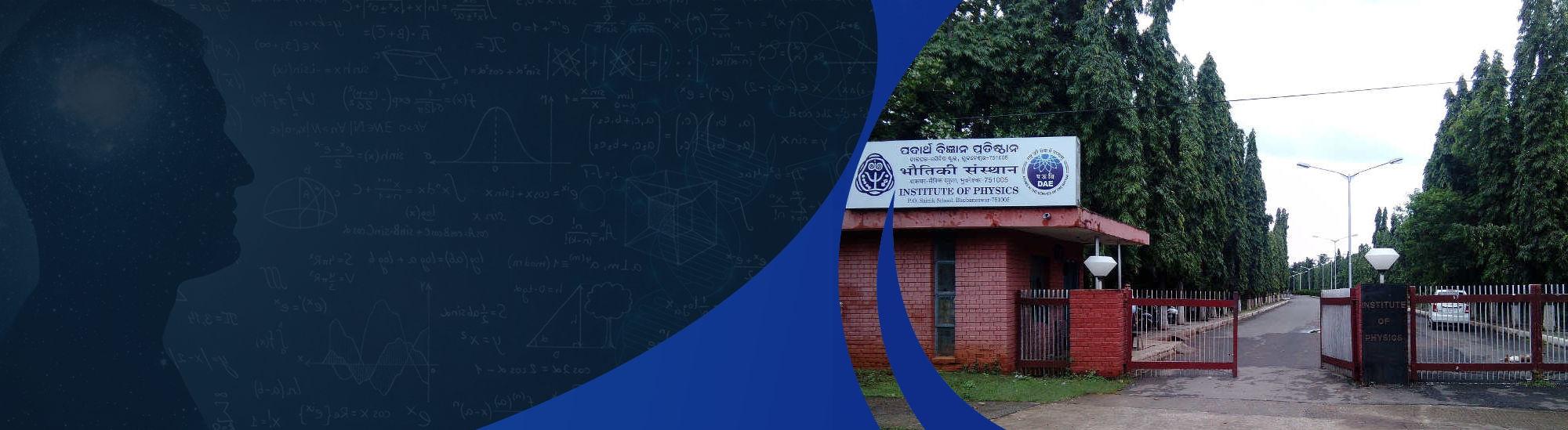
Space and Time-like Electromagnetic Pion and Koan form Factors in Light -cone pQCD
Abstract
We analyze the electromagnetic pion and koan form factors by including sofr and higher-twist effects within the framework of resumed perturbative QCD (pQCD) for both the space and time-like regions. We focus on the transition from the perturbative to non-perturbative behavior in the phenomenological intermediate energy regime. Using a modified “kT†factorization scheme with transverse degrees of freedom, we evaluate the non-perturbative soft contributions as distinct from the hard contributions, ensuring no double counting via the vector Ward Identity at Q2=0. The soft contributions are obtained via local quark-hadron duality while the hard contributions rest on the well known factorization ansatz with intrinsic transverse momentum dependence of the distribution amplitudes modeled via the Brodsky-Huang-Lepage ansatz. Our analysis shows that while the perturbative twist-2 hard part prevails for large Q2 beyond 100-150 GeV2 or so, for low and moderate momentum transfers, say, below 10-16 GeV2, the soft contributions dominate in the space-like region and the twist-3 contributions dominate in the time-like region. Thus, we demonstrate the importance of including the genuine non-perturbative soft and power suppressed twist-3 contributions for simultaneously explaining the space and time-like experimental form factor data to a reasonable good accuracy.
22/12/2009 at 12:00 pm
Prof. R. K. Soni, IIT, New Delhi
Biresh Patel Memorial Lecture
Lecture Hall Block A, Institute of Physics
Document Date:
Functionalized Metal Nanoparticles by Laser Ablation
Functionalized Metal Nanoparticles by Laser Ablation
Abstract
The metal nanoparticles are interesting from the point of view of their optical properties, which strongly depend on both the particle size and shape. Surface plasmon resonances in metallic nanoparticles are used for a variety of applications due to the large enhancement and localization of the electromagnetic field at the metal/dielectric interface. The plasmonic coupling of metal nanoparticles with light enhances a broad range of useful optical phenomena, such as resonant light scattering, surface plasmon resonance absorption, metal induced fluorescence enhancement and surface-enhanced Raman scattering, all of which have tremendous potential for ultrasensitive chemical and biomolecular detection and analysis. Further functionalization of metal nanoparticles can be achieved by either laser exposure or surfactant. Moreover, the surfactant increases the stability of the nanoparticles and avoids the agglomeration and sedimentation. Surface functionalization of MNPs can be monitored in real time by UV-visible spectroscopy of the plasmon resonance. The optical and catalytic properties of Ag and Au nanoparticles are useful to a diverse range of applications. By combining these two metals into a single entity or forming core-shell structures, both the stability and catalytic properties can be further enhanced and localized surface plasmon absorption can be varied. In this talk, we present recent progress in laser ablation of noble metal target in a confining liquid for the synthesis of nanocrystals and formation of nanocomposites. In the recent years laser ablation synthesis in solution has emerged as a reliable alternative to traditional chemical reduction methods for synthesis of noble metal nanoparticles (MNP). The size manipulation by laser irradiation and functionalization of MNPs will be discussed. While femtosecond laser pulses can induce a shape transformation, such as a rod-to-sphere transition, nanosecond laser pulses can cause fragmentation into smaller particles. High fluences can be powerful enough to raise the temperature of the metal above its melting point, and thereby it can be used as a convenient tool to control the shape and size distribution of nanoparticles and intermediate phase nano-soldered composites. Also, the biofunctionality of laser-ablated gold nanoparticles can be tailored through the bonding between gold and amino-group. This linkage of amino-group to gold give rise to red shift in plasmon absorption band and related to the degree oxidation of gold. Nanoaggregate structures formed by gold nanospheres of different sizes and generated by laser ablation from solid gold into water will be discussed for their potential as enhancing nanostructures in surface enhanced Raman scattering (SERS).
Quantum information theory has emerged as one of the frontier areas of research that not only aims to offer radically new ways of processing information but also offers new inights into the nature of quantum world. However, if we ask what is quantum information, then the very notion of quantum information is not yet defined in a more fundamental way. It may be possible that we gain better and better understanding of quantum information by asking questions like what is so `quantum’ about quantum information and investigating essential differences between classical and quantum information. In this talk I will focus on these aspects and highlight some fundamental differences between them.
07/12/2009 at 4:00 pm
Prof. Mukunda P Das, Department of Theoretical Physics, The Australian National University, Australia
Colloquium
Lecture Hall Block A, Institute of Physics
Document Date:
Electroceramics: Mysterious Materials for High Tc Superconductivity
Electroceramics: Mysterious Materials for High Tc Superconductivity
Abstract
Before 1986 it was generally believed that ceramic oxides are poorconductors for electrical conduction. Against this perception asurprise appeared in late 1986 by Bednorz and Müller, who showed thata doped ceramic cuprate becomes a high temperature superconductor. Nowwe find several dozens of high Tc superconductors and they are allceramic perovskites. Although a large volume of literature exists onvarious aspect of high Tc materials, yet we are far from understandingthe real mystery- how these ceramic materials superconduct? In thistalk I present an appraisal of variety of observed anomalies anddiscuss what do these anomalies indicate towards the microscopicmechanism of superconducting pairing?
24/11/2009 at 4:00 pm
Dr. Sreedhar B. Dutta (KIAS, Seoul/Univ. of Nancy, France)
Ageing phenomenon is observed in slowly relaxing nonequilibrium systems.Examples not only include complex glassy systems, but also simplestatistical mechanics systems when rapidly quenched in temperature.These quenched systems usually show scaling properties and universalbehaviour while ageing. I shall give an elementary introduction anddiscuss what an ageing state is, how we try to describe and monitor it,and to what extent it can carry a memory.